Key Fish Species Found in Romanian Rivers and Lakes

Romania's inland water network — spanning over 3,500 km of navigable rivers, roughly 3,000 natural lakes, and several large reservoir systems — supports one of the most diverse freshwater fish communities in Europe. The diversity is driven partly by geography: the Danube corridor connects Central European, Pontic, and Balkan faunal zones, producing overlapping populations not found elsewhere in the EU.
The following profiles cover the species most relevant to recreational fishing in Romania, structured around their biological characteristics, geographic distribution within the country, and the legal framework that governs their capture.
Common Carp — Cyprinus carpio
The common carp is the most widely distributed and most frequently targeted species in Romanian freshwater fishing. It is present across virtually all standing and slow-moving water bodies in the country: the Danube floodplain lakes, the delta canal network, the Siret, Prut, and Olt corridors, and all major managed reservoirs.
Adult carp in Romanian waters typically reach 40–70 cm and 2–8 kg under natural conditions, though fish exceeding 20 kg are documented in large delta lakes and deeper reservoirs such as Izvorul Muntelui (Lacul Bicaz) and Fântânele. Spawning occurs from late April to June in shallow, vegetated areas when water temperature stabilizes above 18°C — which is the biological basis for the April–June general prohibition.
Legal minimum size: 30 cm total length. Fish below this threshold must be returned immediately to the water without removing them from the net or hook more than necessary.
Distribution focus: Delta lakes (Lacul Razim–Sinoe system), lower Danube floodplain (between Giurgiu and Galați), and managed association fisheries throughout the country.
Northern Pike — Esox lucius

Northern pike is the primary predator in many Romanian freshwater systems, particularly in the delta canals, oxbow lakes, and slow-moving lower river reaches where aquatic vegetation provides sufficient ambush habitat. It is one of the few species with a prohibition that falls entirely outside the general April–June window.
Pike spawn in late winter to early spring at water temperatures of 4–10°C. The 2026 prohibition for pike runs February 1 through March 20 nationwide. Within the Danube Delta Biosphere Reserve, the prohibition is extended through June 7 to align with the general prohibition, giving the species a longer protected window in Romania's most ecologically sensitive area.
Pike in Romanian waters commonly reach 60–90 cm and 3–7 kg. Specimens above 10 kg are rare but documented in the larger delta lakes.
Legal minimum size: 40 cm total length.
Distribution focus: Danube Delta canals, Lacul Razelm, upper Siret floodplain, and managed association fisheries with established reed beds.
Wels Catfish — Silurus glanis
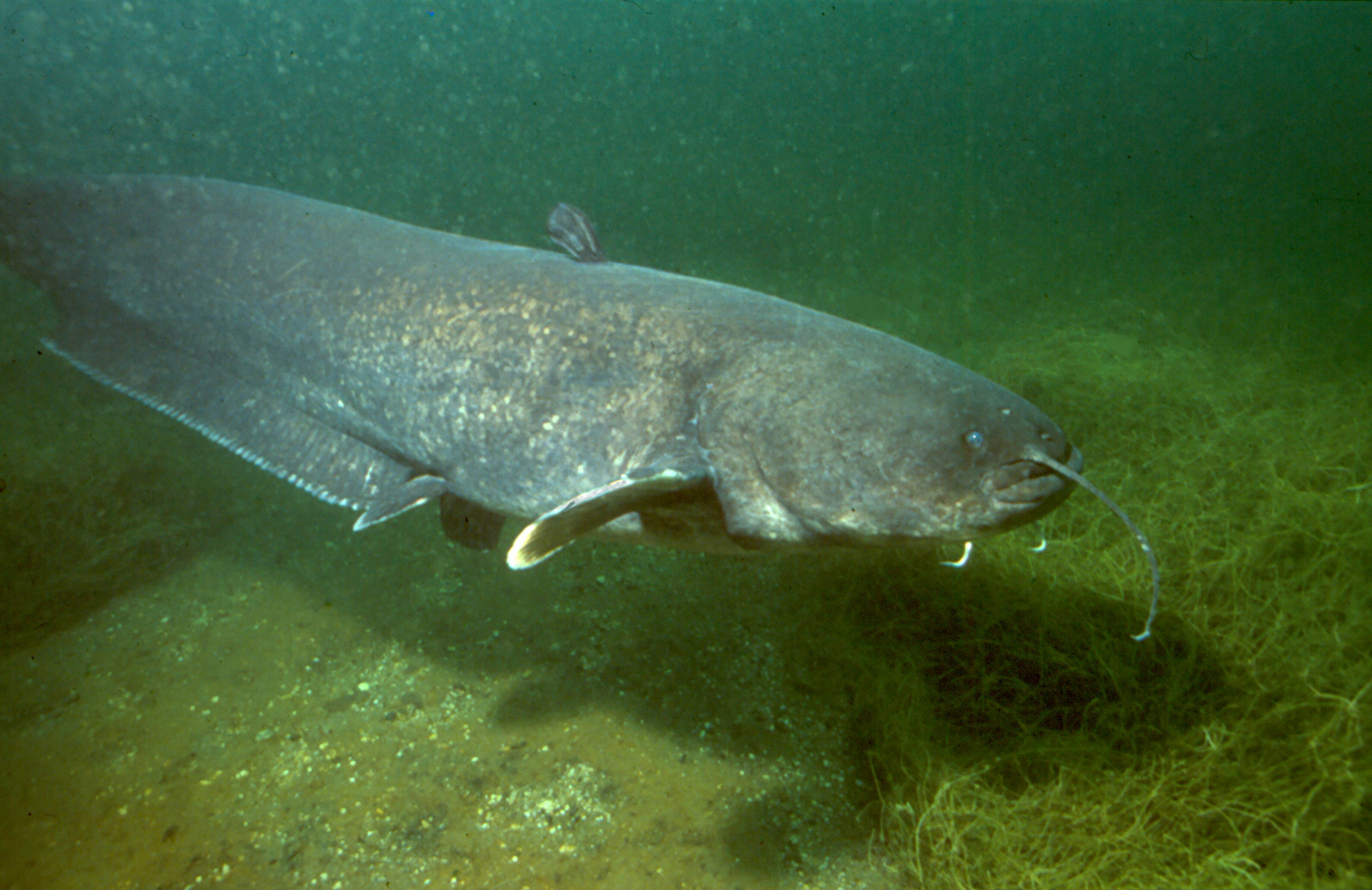
The wels catfish is Europe's largest freshwater fish and holds particular status in Romanian angling culture. The Danube system — including its major Romanian tributaries — supports some of the largest wels populations in Europe. Fish exceeding 2 meters in length and 100 kg in mass have been documented in the lower Danube corridor, though such specimens are increasingly rare.
Unlike pike and zander, wels catfish carry no species-specific prohibition under current Romanian law. They are covered only by the general April–June prohibition. Spawning typically occurs in May and June when water temperatures reach 20–24°C, which means the general prohibition window overlaps substantially with the wels spawning period even without a dedicated restriction.
Legal minimum size: 50 cm total length — the highest minimum threshold among commonly targeted Romanian freshwater species.
Distribution focus: The Danube from Turnu Severin to the delta, the Siret and Prut rivers in their lower sections, and large impoundments such as the Iron Gates I reservoir.
Zander (Pikeperch) — Sander lucioperca

Zander is among the most commercially and recreationally valued species in Romanian inland waters. It occupies turbid, low-visibility stretches of rivers and larger lakes, feeding primarily on small cyprinids and perch. Its tolerance for reduced oxygen and low light conditions allows it to exploit habitat zones inaccessible to pike.
The 2026 prohibition for zander runs March 20 through June 7. This overlaps with both the pike prohibition period and the general prohibition, making the effective closed season for zander one of the longer ones in the system.
Zander in Romanian waters typically reach 40–70 cm and 1–4 kg. Specimens above 8 kg are recorded periodically in the Danube Delta and the Snagov Lake system near Bucharest.
Legal minimum size: 40 cm total length.
Distribution focus: Throughout the Danube corridor, large delta lakes, and stocked association fisheries where cyprinid prey densities are sufficient to support year-round predator populations.
Brown Trout — Salmo trutta
Brown trout occupies the cold, well-oxygenated headwaters of Romania's Carpathian rivers — the upper Bistrița, Lotru, Dâmbovița, and their tributaries. The trout season runs approximately from April 1 through September 30 each year, with the 2025–2026 closed season extending October 1, 2025 through March 31, 2026.
Sea trout carries a year-round prohibition in Romanian waters. Rainbow trout (Oncorhynchus mykiss), though not native, is extensively stocked in managed mountain fisheries and follows the same seasonal framework as brown trout.
Legal minimum size: 25 cm for brown trout; 22 cm for rainbow trout in most managed fisheries (check local association rules for exceptions).
Perch and Tench
Perch (Perca fluviatilis) shares the March 20 – June 7 prohibition window with zander. It is a widespread species found across all types of Romanian standing and slow-moving water bodies, commonly reaching 20–35 cm in well-managed fisheries.
Tench (Tinca tinca) carries a post-general-prohibition window: June 7 through July 6. This extension accounts for tench spawning behavior at higher summer temperatures. Tench is primarily found in shallow, weedy lakes and slow river reaches throughout the country.
Protected and Rare Species
Romania's rivers support several species protected under Romanian law and EU Habitats Directive Annex II or IV. The huchen (Hucho hucho), a large salmonid reaching 1.5 meters, is restricted to the upper Danube tributaries and is listed as Endangered. Sterlet (Acipenser ruthenus) and other sturgeon species carry a permanent year-round prohibition. The asprete (Romanichthys valsanicola) is endemic to a single river system in Argeș County and is among the rarest freshwater fish in Europe.
Anglers who incidentally catch any protected species are legally required to return the fish immediately with minimal handling. Reporting incidental catches to ANPA or the local environmental agency is encouraged and, for some species, may be formally required.

